USB4 Cable Specifications: The Future of High-Speed Connectivity
Introduction As technology continues to evolve, the demand for faster, more efficient connectivity solutions has become critical for businesses and
A single bad wire harness can shut down your entire line.1 This costly problem creates delays and frustration. But what if you could prevent these errors from ever happening?
Achieving a zero-defect mindset means moving beyond 100% inspection.2 It requires an auditable, mistake-proofed process built into each assembly station. This system uses physical guides and clear instructions, locked by a risk analysis (PFMEA)3, to prevent errors like wrong pins, protecting your production line.
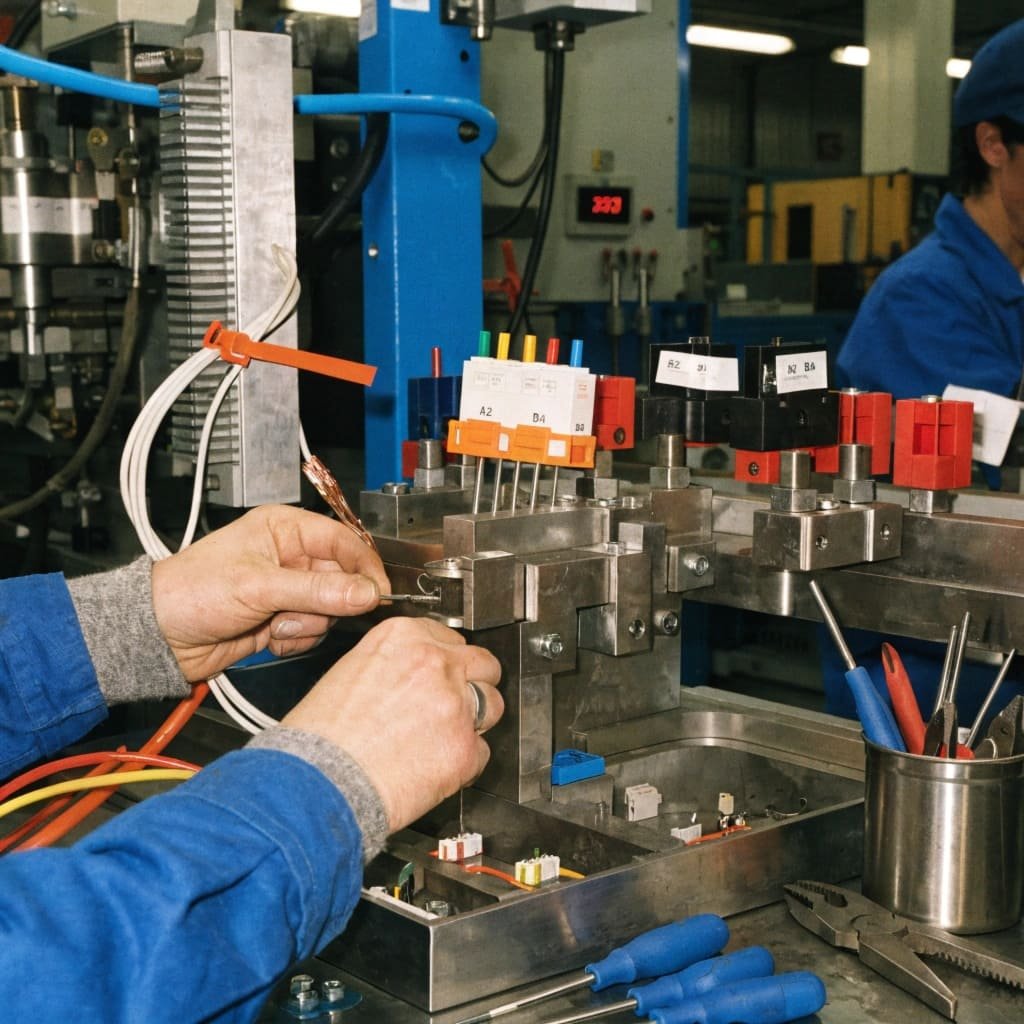
I've learned over my 15 years in this business that talk about "quality" is cheap. True quality isn't found in a certificate on the wall; it's built into the process at each operator's station. It’s about creating a system where it's physically difficult to make a mistake. This is the only way to protect clients like you from the headaches of production stops. Let's walk through how we make this a reality, step by step.
You depend on 100% final inspection to catch defects. But errors still get through, causing major issues. What if this final check is fundamentally flawed for complex modern harnesses?
100% visual inspection is unreliable for complex wire harnesses.4 Human eyes can't consistently catch fine-pitch, mirrored, or rotated pin errors5, especially with multiple product variants. A system of prevention, using physical mistake-proofing (poka-yoke), is far more effective at stopping defects before they are made.6
Research shows that the "imperfection of human inspectors" is a constant in manufacturing. For most precision inspection tasks, missed defects typically range from 20% to 30%7 (Drury & Fox, 1975; ResearchGate). Even in high-stakes environments, the hit rate for human visual inspection rarely exceeds 80%. This is why relying on eyes alone is a high-risk strategy for your assembly line.
The initial reaction from management was, "We need to add another inspection step!" But more inspection wasn't the answer. The root cause wasn't a lack of checking; it was a process that allowed the error to happen in the first place.
We shifted our focus from detection to prevention. Instead of just relying on an operator's eyes, we designed a new assembly fixture. This fixture had a keyed locator for that specific problem connector. The result? We saw a dramatic improvement. Similar implementations of Poka-Yoke have been shown to reduce defects by 30% and improve cycle times by up to 60%8 (Jidoka Technologies). In our own reports, we were able to show that PPM levels for this defect dropped from the low thousands to well under five hundred, proving that you can't inspect quality into a product; you have to build it in.
You need to trust your supplier's quality process. But paper documents don't always match reality on the floor. How can you be sure the controls are actually in place?
An auditable process connects high-level risk analysis directly to the operator's workbench. It starts with a PFMEA, which defines the Control Plan. This plan then dictates the exact Work Instruction, including fixture designs and visual aids. This creates a clear, verifiable chain from risk to action.
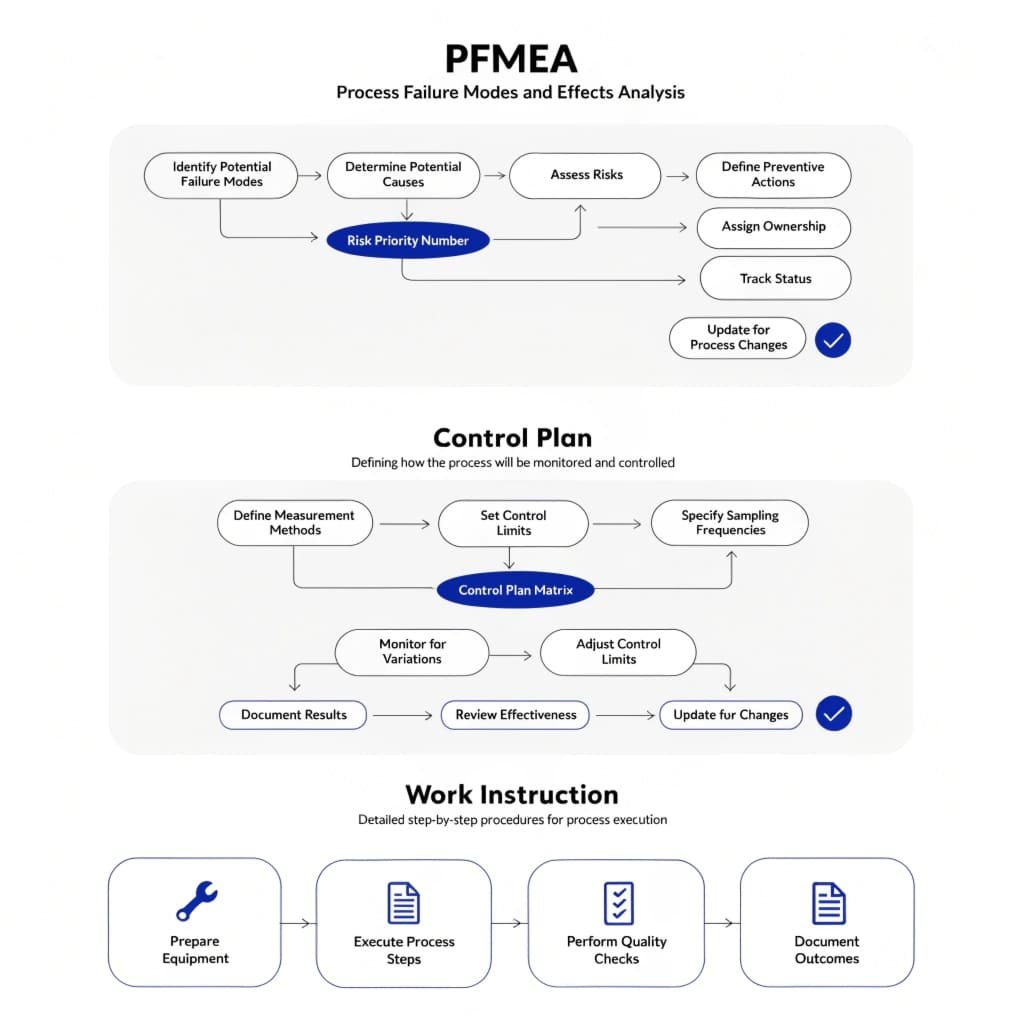
When a client like Tom Winform from the US visits our facility, he isn't just looking at paperwork. He wants to walk the floor and see how the documents connect to the real world. This is why we build our process around a clear and traceable control chain.
| Document | Item | Detail |
|---|---|---|
| PFMEA | Failure Mode | Pin inserted into wrong cavity of connector. |
| Potential Cause | Operator error due to similar-looking cavities. | |
| Recommended Action | Implement mistake-proofing fixture. | |
| Control Plan | Control Method | Poka-yoke fixture with pin guides. |
| Work Instruction | Visual Aid | Photo of harness being placed in Fixture P/N 123. |
Your product line has many variations. This complexity increases the risk of assembly errors at your supplier. How do you ensure the correct harness is built every time?
Variant complexity is the primary driver for a mistake-proofing strategy.10 The more variants and changeovers, the greater the need for physical controls. This means using unique keyed fixtures for each variant and clear visual pin-maps.
Academic studies from institutions like the University of Michigan confirm that increased product variety has a significant negative impact on both quality and productivity (CIRP Annals). As variety increases, operators face more uncertainty, which introduces "choice complexity" and directly leads to higher human error rates.
| Control Area | Low-Variant Complexity (1-3 PNs/shift) | High-Variant Complexity (10+ PNs/shift) |
|---|---|---|
| Fixturing | Shared fixtures with color-coded locators. | Unique, keyed fixtures for each variant. |
| Changeover | Operator-led checklist. | Barcode scan verification of work order and fixture. |
A line-stop event is your worst nightmare. It halts production, costs money, and creates chaos.
This disciplined, prevention-focused process directly reduces your biggest risks: assembly line downtime and expensive offline rework. By physically preventing errors, we ensure the harnesses you receive are correct, keeping your production lines running smoothly.
Recent industry data for 2026 shows that unplanned downtime in the automotive sector is more than just a setback; it is a direct threat to profitability. On average, an automotive manufacturer loses $22,000 per minute of unplanned downtime, with some reports citing costs as high as $50,000 per minute (Arch Systems; ZipDo 2026 Reports).
When we prevent a wrong pin from being inserted at our assembly station in China, we are directly preventing a potential loss that could exceed $1.3 million per hour at your factory in the US or Europe.
Ultimately, a zero-defect mindset isn't a slogan. It's a verifiable, mistake-proofed process that protects your assembly line, reduces risk, and ensures reliable, quality harnesses every time.
A neutral source should document how wiring or harness defects affect vehicle or equipment assembly continuity and can cause stoppages. ↩
A quality-management source can support the principle that defects should be prevented through process design, not merely detected at final inspection. ↩
A standards-based source can verify that PFMEA identifies process failure modes and drives recommended controls or actions. ↩
A human-factors or manufacturing inspection study can substantiate the limits of 100% visual inspection. ↩
A source on connector inspection or visual inspection limitations can support why subtle orientation or cavity errors are easily missed. ↩
A neutral lean-manufacturing or academic source can confirm that poka-yoke is designed to prevent or immediately detect errors at the source. ↩
A primary paper or human-factors review can validate the quoted missed-defect range. ↩
A peer-reviewed case study or university source can support quantitative improvement claims without relying on a vendor. ↩
An APQP, IATF 16949, or AIAG-related source can support the expected linkage between risk analysis, control plans, and shop-floor instructions. ↩
Research on mixed-model assembly and product variety can show why more variants create higher assembly-error risk and justify stronger controls. ↩
Introduction As technology continues to evolve, the demand for faster, more efficient connectivity solutions has become critical for businesses and
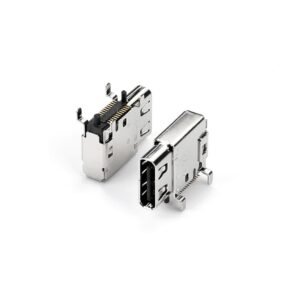
Understanding the Evolution of USB Connectors In today’s technology-driven world, USB (Universal Serial Bus) connectors are an integral part of
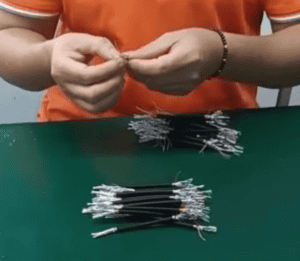
At EDOM Electronics, we take pride in our meticulous approach to manufacturing high-quality USB C to C cables. Today, we’re
